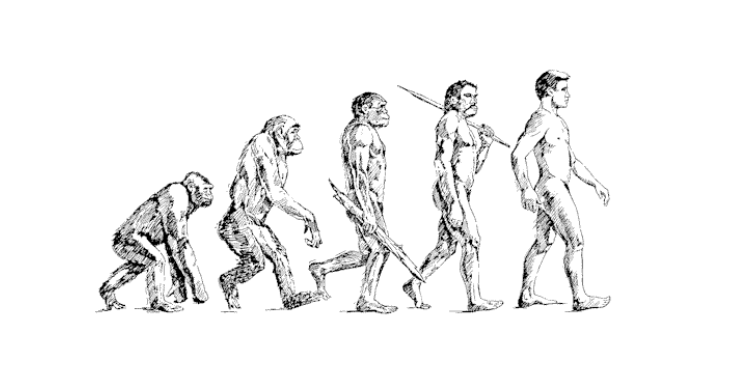
Quite frankly speaking, all hominins are considered potential precursors of humans or Homo Sapiens. The entire evolutionary progress has some interesting links to the apes, chimpanzees, and genus homos. Although we are very different in terms of our ways of living and habits, biologically and culturally speaking, we are very similar. For example, in the case of chimps, apes, and other hominins, we have established bipedal characteristics, meaning we could walk on two feet. Later in the evolutionary progress in the genus homos species, such as Homo Habilis, it was further established that they are vastly more intelligent compared to their predecessors due to their expanded brain capacity and increased development of precision of grips with their hands. This evolution is crucial because it led to the ultimate evolution, the Homos Erectus. With this evolution, the brain capacity was expanded even further to nearly one-third more capacity compared to Homo Habilis.
Additionally, with this evolution, this now-extinct predecessor exhibited the trait of stronger foot muscles that accelerated and boosted their walking distances and self-balance through the concept of genetic inheritance and social adaption. Also, with its expanded brain capacity and this general evolutionary adaptation, these human ancestors became capable of perfecting their life through knowledge of using various tools. This has likely contributed to or opened the door to modern Homo Sapiens such as us to expand technological innovation.
Therefore, now you should be able to see why the earlier picture of human evolution was exceedingly misleading. The human evolution process is just simply not a linear progression from apes to humans. Instead, human evolutionary progress is a heavily complex and lengthy process of growth involving adapting to our surroundings and learning from our environments. All of which contribute to the idea of natural selection. Furthermore, through the progress of eliminating useless genes, we were able to evolve into a much superior species with little to no lingering traits. All of the traits passed down from our human-like ancestors had one purpose and one purpose only: to improve our likelihood of surviving in this ever-growing, expanding, and brutal environment.
Responses to the professor or other students:
Response One:
I like your mention of interbreeding, and I didn’t quite include this part in my own discussion post reply. I kind of just categorized it as one of the many factors that influenced human evolution. But you are absolutely right. There are so many factors that influence our evolution, including genetic inheritances and social adaptation. I actually genuinely feel that social adaptation plays a critical role because it granted our predecessors and us, homo sapiens, the capability of “prolonging life,” and this is not in a medical sense, but in a social sense of how we were able to survive in harsh climate changes over a couple of millions of years and dodging beast attacks.
Response Two:
Yes. I agree that these simple characterizations of humans that somehow evolved from apes and monkeys are just destroying the credibility of science. And to some extent, it has backfired against science because creationists will often use these mischaracterizations to discredit the science community. Quite frankly speaking, nothing in life is a simple black and white issue; there ought to be some grey areas that must be explored in detail to provide better context.
 Clover's Tree Hollow